
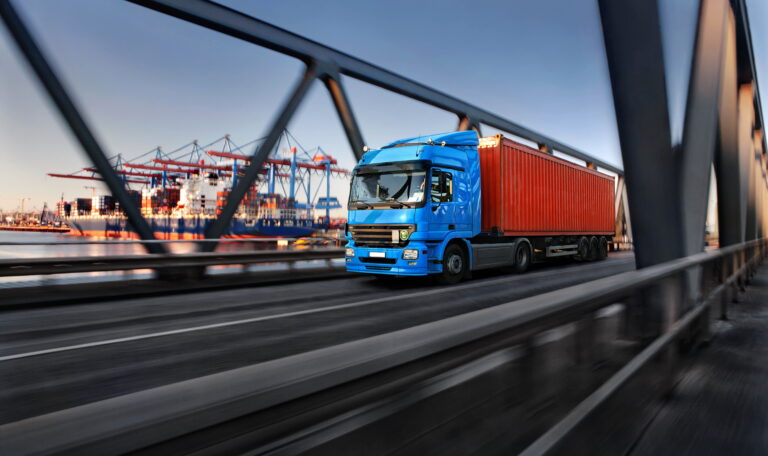
Within the field of land transport for exports, we have two cargo modalities that can be flexibly adjusted according to the needs of your company and the goods you want to move. Which are FTL (Full Track Load) or full truck load in Spanish and LTL (Less Than Truckload) or consolidated cargo
Export logistics is one of the points you should pay the most attention to when marketing your goods, as it is a decisive pillar to ensure that the products arrive safely at their destination. This is where FTL or LTL emerge as a couple of viable options for transporting products.
What is FTL
The Full Track Load (FTL) concept refers to the term full load, which implies that the goods to be transported are occupying all the available space in the trailer.
In this way, FTL transport is a viable option for those companies looking for security and speed in their delivery times, since this modality has a single route and does not involve the transfer of the cargo to another means of transport.
delicate, high-risk or urgent products. Goods traveling in full-truckload transports are less likely to be damaged because there are no stops and only few touchpoints, so insurance is usually less expensive.
It is also important to note that Full Track Load (FTL) also benefits the logistics company, since by focusing on a single customer, delivery will be even more effective and it will not be necessary to make stopovers that can intervene in the delivery of products.
In other words, FTL is when the truckload’s entire load belongs to a single shipper and recipient.
Some features of FTL are:
- The delivery time is generally faster than LTL.
- The cargo is transported directly from one point to another without intermediate stops.
- The shipper has full control over the contents of the cargo.
- The fee is generally higher than LTL due to the greater space and control.
In short, the FTL ground transport modality defines a type of shipment in which a truck transports the goods exclusively.
What is LTL
LTL is the abbreviation for “Less Than Truck Load”. LTL transportation occurs when a truck’s cargo space is not fully utilized.
The transport company has the option of filling the free space of its truck with other goods from other customers. In general, it usually means that several small loads are added into a single shipment.
Some features of LTL are:
- The delivery time is generally slower than FTL.
- The truck makes multiple stops to pick up and deliver loads.
- Shippers do not have full control over the contents of the cargo.
- The fee is generally lower than FTL due to shared space.
Main Differences Between FTL and LTL
In addition to the main difference inherent in their characteristics in shipping, FTL and LTL have other types of differences encompassed in the following categories:
Cost differences
FTL and LTL freight carriers may differ in their prices. LTL is a good option to save costs if small volumes of goods need to be shipped.
Environmental Impact
LTL shipping is a shared transport of goods, so it has a lower environmental impact. Booking an entire truck without taking up all its space is very unprofitable and sustainable.
Therefore, the LTL system will always have a smaller footprint in these cases. When there is no difference in the environmental impact is when the FTL modality covers the entire truck, in those cases the impact would be the same.
Delivery times
FTL transport picks up the cargo and delivers it to the intended destination. LTL transport has to make stops at multiple locations, which means that delivery times will almost always be longer.
The LTL system forces you to pick up more goods from different customers, these stops affect the accuracy of the delivery times of the total shipment.
Loading and unloading
In FTL transport mode, the truck loads and unloads only once. LTL transport has to move goods to make room for new ones, partially unloading at different locations, which increases the time as well as the risk of damage.
FTL vs LTL When to use each?
Now that we know the concepts and differences between FTL and LTL, let’s see when it is advisable to use each of them.
When to use FTL?
As we have already mentioned, the FTL method is used when the load occupies the volume of the entire truck.
Although it is possible to ship small loads, it is more advisable, if possible, to fill the truck with your own load, which will reduce costs and minimize risks and times.
It is a very good option for the shipment of fragile or sensitive products, as the amount of third-party cargo is reduced, the risk is lower.
It is also advisable to use FTL if delivery times are tighter, as it is a faster and more accurate method.
When to use LTL?
It is often said that if the shipment of the cargo is less than 6 pallets, the LTL system is recommended. The costs are lower than those of the FTL option as you share cargo space with other goods from other customers, and therefore the cost can be split.
LTL is the best alternative if you can afford more flexible and longer lead times and the cargo is not sensitive or fragile.
Conclusions
FTL and LTL are two modes of land transport that provide interesting and very different characteristics, whose advantages and disadvantages must be analysed according to the needs of each client. The choice will depend on these needs.
It is also interesting to know the opinion of your logistics partner, who due to their experience in the sector can give you a very valid opinion.
Across Logistics is the leading company in logistics solutions of different kinds, offering different logistics solutions responding to the strictest time, cost and sustainability demands of its customers.